
After Dark in Mindo: The Cloud Forest's Other Wildlife

BEYOND GUIDE · WILDLIFE
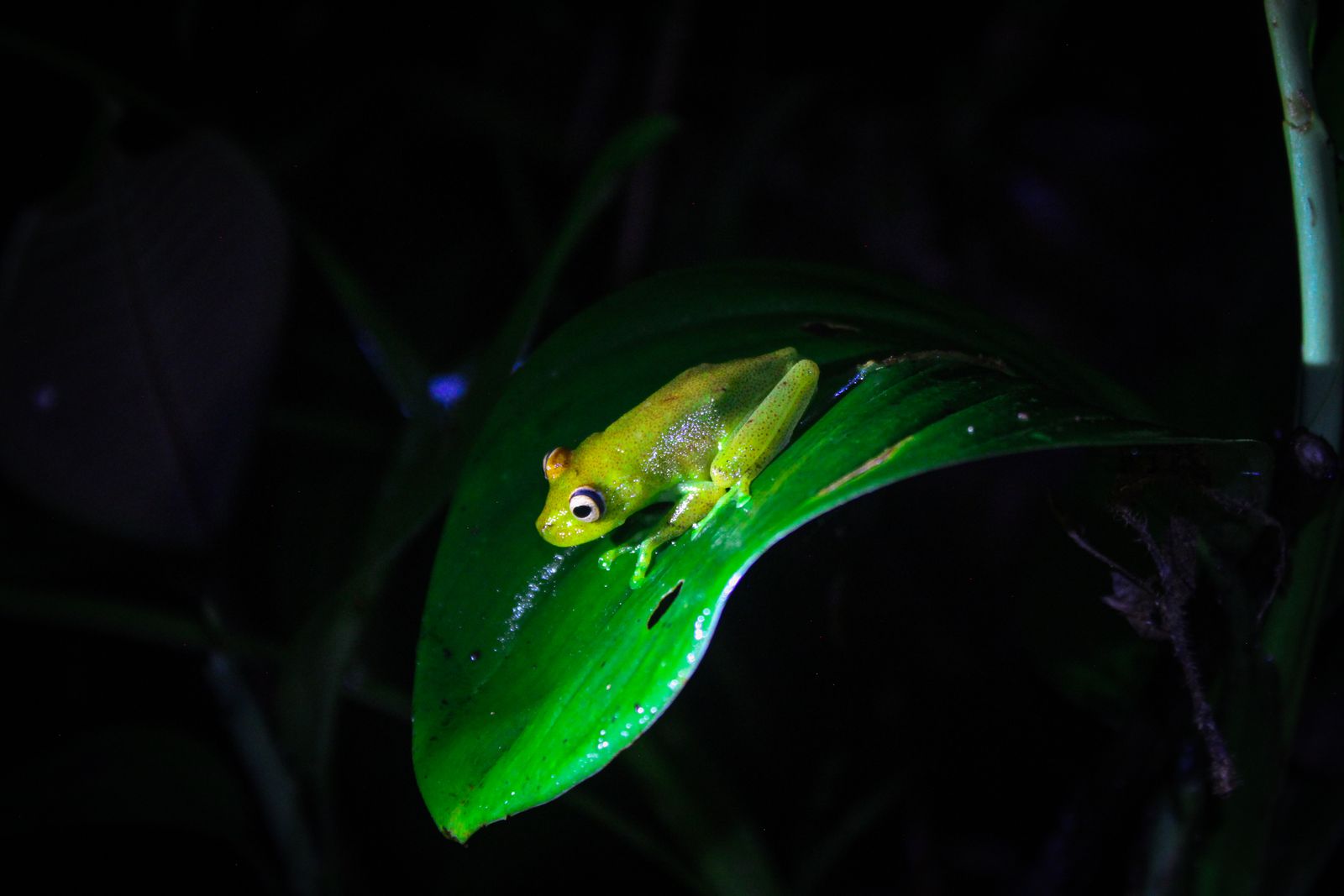
A frog photographed after dark in the Ecuadorian Amazon, illustrating the kind of small nocturnal wildlife worth observing. Not a Mindo sighting.
During the day, Mindo's cloud forest attracts attention with hummingbirds, toucans and the enormous variety of green. After sunset, the same vegetation becomes a different place. Calls rise from the understory, leaves move in the beam of a torch, and animals easily missed by day become easier to notice. A night walk is not simply a daytime nature tour in darkness.
This is one of the things that makes Mindo particularly appealing to me. I love the obvious wildlife, but I am just as interested in the smaller, stranger things that appear when somebody knowledgeable shows you where to look. Frogs, moths, beetles and hunting spiders may not have the marketing power of a toucan, but they can tell you an enormous amount about the forest.
BEYOND THE BROCHURE
The best night walk is not necessarily the one promising the rarest animal. I'd choose the guide before I chose the wildlife wish list: natural-history knowledge, a small group, sensible lighting and genuine respect for the animals matter far more to me. A quiet encounter with a frog or a hunting spider can be much more interesting than charging through the forest in pursuit of a large mammal that may never appear.
Why does the forest feel different after dark?
Many animals alter their activity patterns to avoid heat, predators or competition, or to exploit food sources that are more available at night. Cooler, damp conditions may encourage certain frogs, insects and invertebrates to move or call. But nocturnal activity is not universal, and conditions change from one evening to another.
Listen first: the amphibians
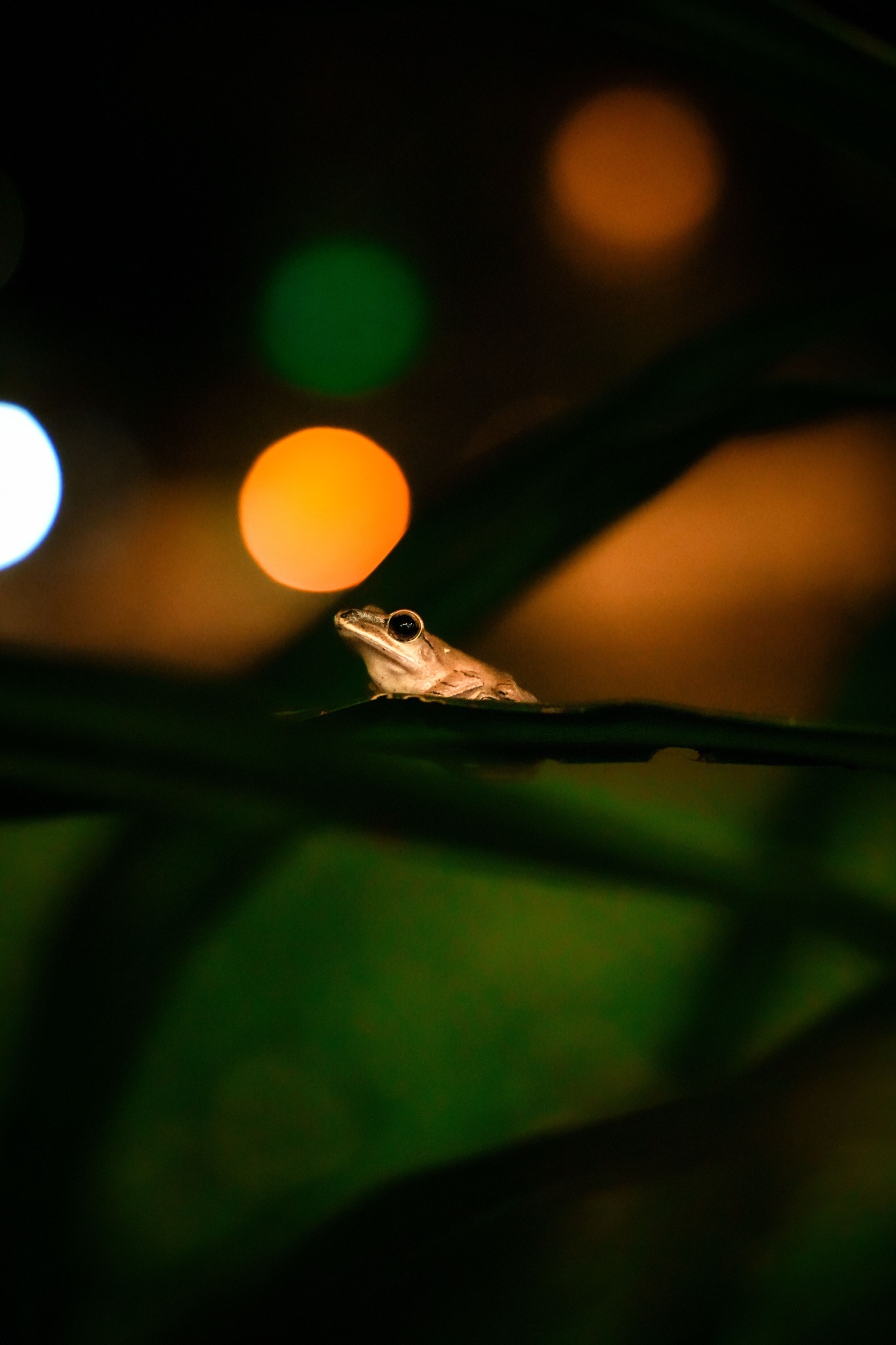
Frog photographed after dark. Illustrative image, not documented as a Mindo sighting.
Frogs are often heard before they are seen. Different species may call from leaves, vegetation beside water or hidden perches. Males commonly use calls to attract mates or maintain spacing; understanding this turns a seemingly random chorus into a set of signals.
The region includes many amphibians, and glass frogs are particularly intriguing. In some species, translucent skin on the underside reveals internal structures. That does not mean every green frog seen at night is a glass frog, nor should guides handle an animal to demonstrate its anatomy. Identification belongs to someone with the right expertise, and an animal's welfare comes first.
Moths, beetles and the night-time workforce
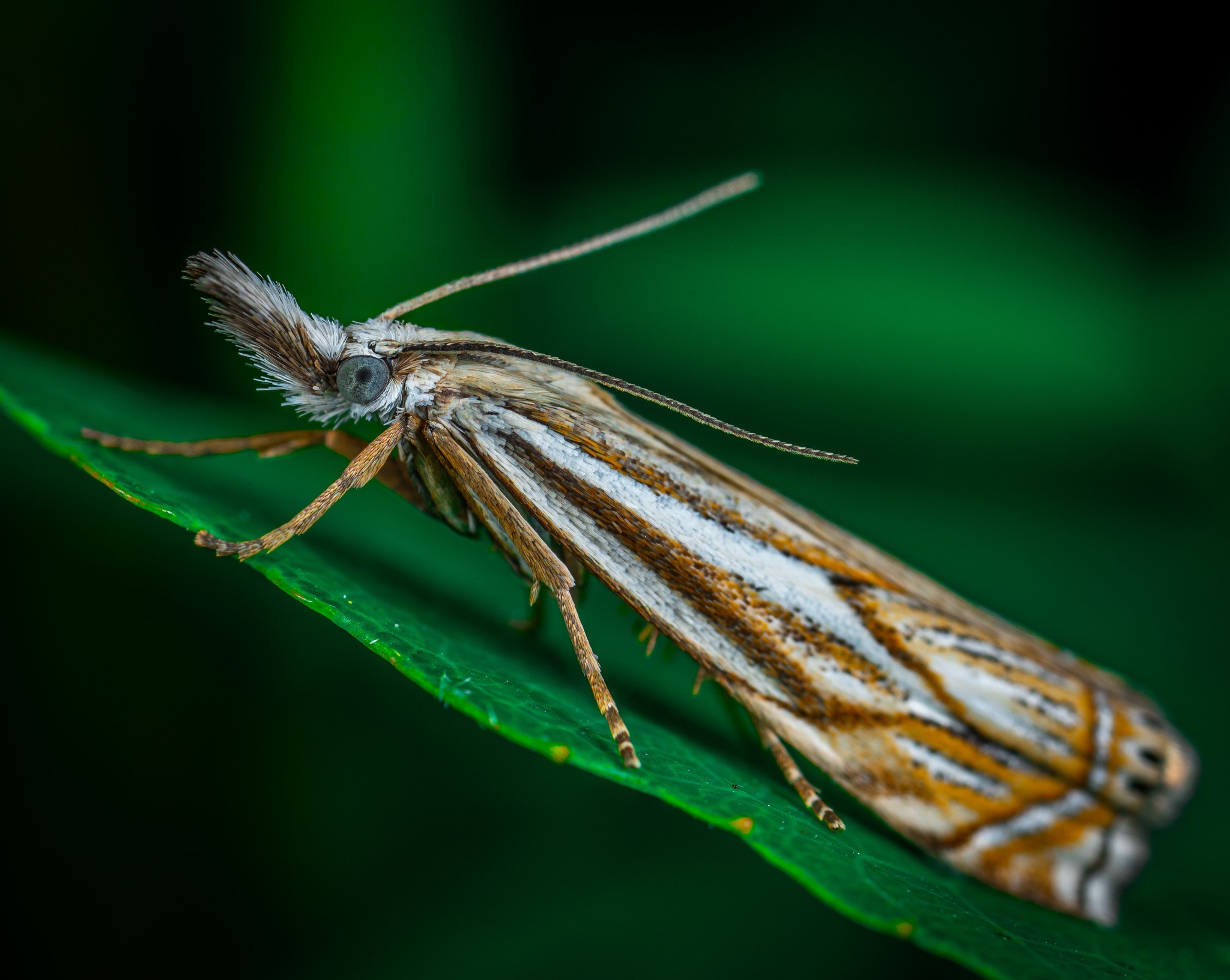
Close-up of a moth resting on a leaf. An illustrative photograph.
Insects are very easy to overlook until somebody explains how much of the forest depends on them. Some visit flowers, some feed on leaves, some recycle organic matter and many become food for something else. This is exactly the kind of natural-history detail I enjoy: the creature that initially looks like a small brown moth can turn out to be part of a much bigger ecological story.
A torch may reveal eye shine, iridescent wings or insects camouflaged as twigs and leaves. Avoid touching unfamiliar insects, and never remove an animal from its habitat for a photograph. Close observation is far more interesting than staging a dramatic pose.
Spiders, scorpions and unnecessary fear
A good guide can introduce the roles of nocturnal predators and explain why an animal is where it is. Some scorpions fluoresce under ultraviolet light, but a fluorescent response is not proof that an animal is safe to approach. Follow guide instructions and keep hands away from crevices, fallen timber and unseen vegetation.
I would much rather finish a night walk understanding a few animals better than leave with a dramatic photograph achieved by stressing them. Responsible guiding should make you more interested and informed, not more frightened, and observation should happen at a safe distance.
And the larger mammals? Manage expectations
The broader cloud-forest region supports elusive mammals, but I would be deeply suspicious of anyone selling a short night walk around the promise of seeing one. Frogs, insects and other small nocturnal wildlife are far more realistic subjects. Nature does not become less interesting because the headline animal fails to turn up.
How to choose a proper night walk
Ask how many guests are in the group, whether the route uses established trails, how long the walk lasts, and whether the guide specialises in amphibians and insects. Confirm whether headlamps are supplied, which footwear is appropriate, whether there are steep steps or stream crossings, and how the outing is adapted in heavy rain.
Local operators advertise guided Mindo night walks and more focused frog-listening experiences. Those are different products: one may cover a wider variety of nocturnal animals while the other concentrates on amphibian calls and habitat. Neither description guarantees what will be visible on a particular night.
Wildlife photography without making the photograph the priority
Bright light can disturb nocturnal animals. Keep viewing and photography brief, follow local guidance and avoid unnecessary flash, chasing, touching or repositioning wildlife. Do not clear vegetation, open hiding places or encourage a guide to handle frogs for a better angle. Amphibians can be vulnerable to stresses and disease transmission associated with handling.
Is a night walk suitable for everyone?
Not necessarily. Darkness changes how you judge surfaces, and wet roots, mud or steps can be challenging. Someone who is uneasy around insects might prefer a shorter, easier walk with the option to return early. A well-chosen route can still work for beginners, but accessibility needs checking in concrete terms rather than relying on an 'easy' label.
Where you stay can change the evening
Where I stay matters here because I like wildlife to be part of the stay rather than something I only encounter on a scheduled excursion. Mindo is getting six nights on my own 2027 Ecuador itinerary, so I will be looking closely at what can be explored around the lodge as well as which specialist night walks are worth travelling for. I would still confirm the exact activity and guide rather than assume that every forest lodge offers the same experience.
Why this is more than an add-on after birdwatching
For me, this is not the activity to tack onto the end of the day because there happens to be a spare evening. A night walk reveals a different set of ecological relationships: predators and prey, mating calls, insects visiting flowers and animals using shelter in wet vegetation. The quality comes from observation and interpretation, not from collecting a rare sighting.
When the forest becomes unfamiliar again
One of the pleasures of Mindo is that the same trail may feel entirely different between breakfast and bedtime. You don't need a major wildlife encounter for that to be worthwhile. Learning to notice the ordinary night-time life of the forest can be more memorable than being promised something extraordinary.
If you're considering an Ecuador cloud-forest stay and want to include responsible wildlife guiding after dark, I can help compare properties, activity providers and practical arrangements. Get in touch to discuss your plans.
FURTHER READING
For examples of locally marketed activities, see Mindo Bird Watching's night walk and frog-concert descriptions. Wildlife, duration and access depend on conditions; provider descriptions are not guarantees or independent ecological evidence.

Comments