
The Peruvian Amazon: Rainforest Lodge, Research Centre or River Cruise?

BEYOND GUIDE · PERU & THE AMAZON
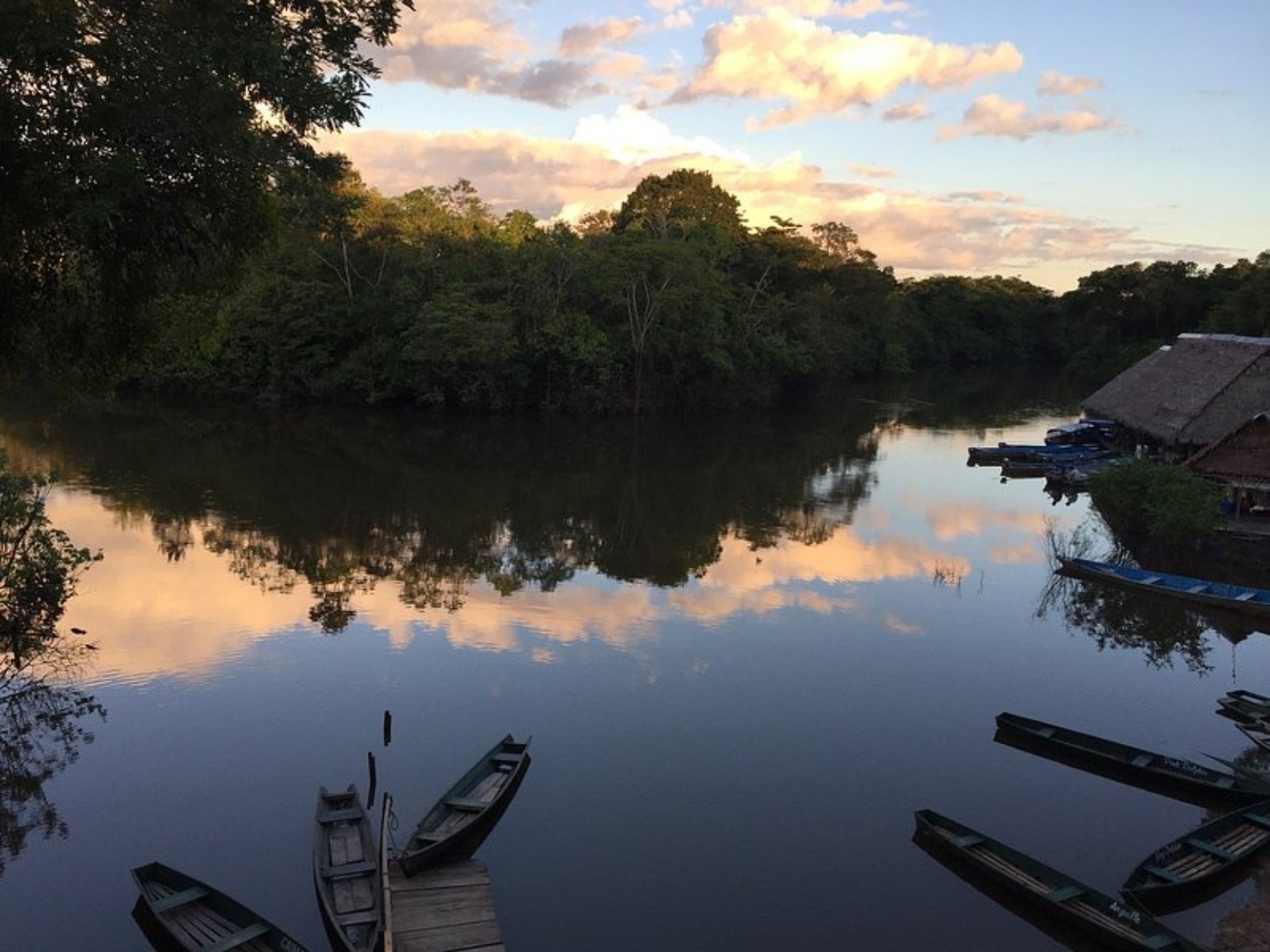
Tahuayo River at sunset.
There's something about the Amazon that captures the imagination. The rainforest waking up before sunrise, monkeys moving through the canopy, the possibility of spotting a pink river dolphin from a small boat, and the knowledge that there's an extraordinary amount of life around you that you probably won't even see.
But when you start looking at how to visit, the choices become more complicated. Should you stay in a rainforest lodge? Travel further into the forest to a research centre? Or explore the waterways aboard a river cruise?
They're all ways of experiencing the Peruvian Amazon, but they can feel like completely different holidays. And before choosing between them, there's another question worth asking.
First, which part of the Peruvian Amazon?
What struck me when I started planning my own Amazon trip was just how much the location influences the experience.
The two main gateways are Iquitos in northern Peru and Puerto Maldonado in the south. They're not simply two entrances to the same rainforest.
Iquitos opens up the waterways and flooded forests of the northern Amazon, including Pacaya-Samiria and the Tamshiyacu-Tahuayo conservation area. This is a region associated with pink river dolphins, an extraordinary variety of monkeys and travelling deep into the forest by boat.
Puerto Maldonado is the gateway to Tambopata, known particularly for its macaw clay licks, where brilliantly coloured parrots and macaws gather on exposed riverbanks. The south also offers forest trails, lakes and remarkable biodiversity.
The difference matters if there's something particular you're hoping to see. The striking red-faced uakari monkey is a northern Amazon species, while the famous large macaw clay-lick spectacles are a highlight of southern Peru. Of course, wildlife doesn't work to an itinerary. Nothing is guaranteed, wherever you go.
BEYOND THE BROCHURE
If wildlife is your main reason for visiting, I'd start with the habitats and species you're most interested in, rather than choosing the nicest-looking accommodation and hoping everything else falls into place.
Option 1: A rainforest lodge
For travellers who want to settle into the forest and explore it properly
Tahuayo Lodge, Peru.
A rainforest lodge gives you a base from which to discover the surrounding area. Days might involve walking forest trails, heading out by canoe, looking for birds at first light or taking a guided night walk to discover what appears after dark.
What appeals to me about this style of travel is the opportunity to slow down. You're not constantly moving on to the next place. Instead, you get to know one area, returning to different habitats at different times of day. A stretch of forest that seems quiet in the afternoon might be completely different at dawn.
And there is a lot to be said for sitting still, listening and letting the rainforest come to you.
But not all lodges offer the same experience. Some are relatively close to the airport, with comfortable cabins, good facilities and organised excursions. Others involve several hours travelling by boat and offer a much more rustic experience.
The guiding arrangements can be just as different. At some lodges, you join scheduled group excursions. Others offer private guiding, allowing you to spend longer birdwatching, change plans when something interesting is spotted or simply choose a gentler day.
Who would I recommend a rainforest lodge to?
Someone who enjoys nature, wants plenty of time exploring on foot and by boat, and likes the idea of staying in one place rather than following a fixed route. It's particularly appealing if you want your days shaped around your interests, provided you choose a lodge with the right guiding arrangements.
What I'd check: How far is the lodge from the airport? Are excursions private or shared? Is there air-conditioning, or just fans? And how much of the surrounding forest can you realistically explore during your stay? Those details can make a much bigger difference than the accommodation photographs.
Option 2: A research centre
For travellers who want to venture further into the forest
Amazon Research Centre surrounded by forest.
This is where things get especially interesting for me. The term research centre sounds as though you'll be spending your days alongside scientists, helping to monitor wildlife or contributing to conservation projects.
Sometimes guest participation in research is possible. But it isn't something I'd assume simply because a property has 'research centre' in its name.
Some centres have a genuine history of scientific study while also operating as accommodation for visitors. The experience may still consist primarily of guided wildlife walks, canoe trips and learning from experienced naturalists. That's not necessarily a disappointment. For the right traveller, the location itself is the attraction.
The Amazon Research Centre in northern Peru
For my own forthcoming trip, I've chosen to combine Tahuayo Lodge with the Amazon Research Centre, operated by Amazonia Expeditions.
Tahuayo offers private guiding and the flexibility to shape each day's activities around what interests us. We'll then travel further upriver to the research centre, where the accommodation is more basic but the attraction is access to a remote forest area with an extensive network of research trails.
The centre has a history of wildlife monitoring, including primate research. I'm particularly looking forward to spending several days exploring with a guide, rather than trying to fit everything into a handful of excursions.
I'm also realistic about what we're going for. I don't expect to arrive and be handed a clipboard and a new career in primatology. I'm going for the wildlife, the forest and the chance to learn from people who know it far better than I ever will. And I'm perfectly happy to trade some creature comforts for that.
Who would I recommend a research-focused stay to?
Someone with a strong interest in wildlife, ecology or natural history, who enjoys walking and doesn't mind more basic facilities in exchange for access to a remote location. I'd be more cautious about recommending it to someone who needs air-conditioning, wants a high level of comfort or would find long boat transfers and uneven trails difficult.
WORTH KNOWING
If participating in scientific research is important to you, ask exactly what opportunities are available to ordinary guests during your travel dates. A property's research history doesn't automatically mean there's an active citizen-science programme you can join.
Option 3: An Amazon river cruise
For travellers who want to explore without giving up their comforts
Aria Amazon, operated by Aqua Expeditions and chartered by Uniworld. Image courtesy of Uniworld.
An Amazon river cruise is a very different proposition from staying in a lodge. Rather than travelling to a fixed base, the ship becomes your accommodation as you move through the waterways. You might wake up somewhere entirely different from where you went to bed.
In northern Peru, small expedition-style river ships explore the Amazon's tributaries and the waterways around Pacaya-Samiria.
Excursions generally take place aboard smaller boats, often called skiffs, which can navigate narrow channels and bring you closer to the forest. Depending on the itinerary and water levels, there may also be guided walks and visits to local communities.
Back aboard, you have the comfort of your cabin, meals prepared for you and somewhere to relax between excursions. And these aren't necessarily enormous cruise ships. Some carry only a few dozen guests.
Operators such as Aqua Expeditions and Delfin offer a more luxurious experience, with air-conditioned suites, good dining and naturalist-led excursions. For someone who loves wildlife but doesn't particularly fancy sleeping in a rustic forest cabin, I can see the appeal.
What are you really paying for?
I'd look past the ship's photographs and price tag. A premium river cruise can offer considerably more comfort than a remote lodge, but that doesn't automatically mean better wildlife sightings.
I'd want to know how much time is actually spent exploring, how many people share each excursion boat, where the itinerary travels and how the programme adapts to changing river conditions. A beautiful suite is lovely. But if your priority is wildlife, I'd rather know what happens when you leave it.
Who would I recommend a river cruise to?
Someone who wants a combination of wildlife, comfort and varied scenery, particularly if they enjoy the idea of returning to an air-conditioned cabin and a good meal after a morning exploring. It can also work well for travellers who would prefer to skip an occasional excursion and enjoy the ship instead.
That said, river cruising isn't automatically suitable for everyone with limited mobility. Getting into smaller excursion boats can still involve awkward steps, and accessibility needs checking with the individual operator.
So which experience is actually better?
I don't think there is one. And I'd be wary of anyone who tells you that the most expensive option must be the best.
If your priority is… | I'd start with… |
Forest walks and time to linger | Rainforest lodge |
Remote habitats and natural-history learning | Research-focused lodge |
Comfort and varied waterways | Amazon river cruise |
Flexible days shaped around your interests | Lodge with private guiding |
Seeing particular wildlife | Region and habitat first |
Even within those categories, two properties can offer completely different experiences. A lodge with an exceptional private guide may be a better choice for a keen wildlife enthusiast than a luxury cruise. Equally, someone who struggles with heat or values a comfortable cabin may enjoy a cruise far more than a remote research centre.
The best choice is the one that matches how you actually want to spend your days.
Does the time of year make a difference?
Yes, although not quite in the way you might expect. The Amazon doesn't have a simple 'good season' and 'bad season'. Around Iquitos, the rivers rise and fall significantly throughout the year, changing how you explore the forest.
During higher-water periods, boats and canoes can reach areas of flooded forest that aren't accessible at other times. This can be wonderful for exploring among the trees and looking for wildlife from the water.
During lower-water periods, more forest trails and riverbanks become accessible, creating different opportunities for walking and wildlife watching. Neither automatically produces better sightings.
Because river levels vary from year to year, it's worth asking how an operator adapts its excursions rather than relying on a fixed list of activities. For me, the more useful question isn't simply when is the best time to visit? It's what would you most like to do when you're there?
How long should you spend in the Amazon?
This is one part of the trip where I wouldn't rush if you can avoid it. A three-night stay can give you a worthwhile introduction, especially if you're combining the Amazon with other parts of Peru.
But flights, road journeys and boat transfers take time. And wildlife watching is rarely improved by having to be back somewhere for lunch because you're leaving tomorrow.
With four or five nights, there's more opportunity for early starts, night excursions and exploring different habitats without feeling quite so hurried. A longer stay can open up more remote areas or allow you to combine two different bases.
That's part of the reason I've chosen a longer itinerary myself. I don't want to travel all the way to the Amazon, spend most of the first day getting there and then feel as though I've barely scratched the surface before leaving.
That doesn't mean everyone needs a week. It means being realistic about how much time you'll actually have in the forest once the transfers are taken into account.
What about travelling responsibly?
This matters to me, particularly when visiting somewhere as ecologically important as the Amazon. You'll see plenty of accommodation and tour operators describing themselves as sustainable, eco-friendly or conservation-focused. Those words are a starting point, not proof.
I'd be interested in how local communities benefit, whether guides are employed locally, how wildlife encounters are managed and whether conservation partnerships have substance behind them.
One thing I'd avoid altogether is any excursion involving wild animals being handled, fed or presented for photographs.
Red bald uakari, Iquitos, Peru. Photo: Kevin O'Connel / Wikimedia Commons (CC BY 2.0). Original image: Wikimedia Commons.
A red-faced uakari. Wildlife encounters in the Amazon are never guaranteed.
Seeing a sloth in the canopy might take patience and a very good guide. That's rather the point. I would much rather have a brief, genuine encounter with an animal in its natural habitat than a guaranteed photograph that comes at the animal's expense.
The questions I'd ask before booking
By this stage, you can probably see why I wouldn't choose an Amazon trip on accommodation photographs alone. These are the details I'd want to establish:
Where exactly will you explore? Which rivers, habitats and protected areas are included?
How will your days work? Private guiding, shared excursions or fixed schedules?
What wildlife is realistic? Match the species you're hoping to see to the region and season.
What does comfort mean here? Check cooling, bathrooms, electricity and accessibility.
How much time is spent exploring? Factor in transfers and the actual time available with guides.
How does the operator approach conservation? Look for evidence behind wildlife and community claims.
Which would I choose?
For this particular trip, I've chosen the lodge and research-centre combination. I love wildlife and natural history, I enjoy being outdoors, and I'm quite happy spending hours looking for something that might or might not appear. I also like having the freedom to change plans when something interesting comes along.
The private-guiding model at Tahuayo was a big part of the appeal, as was the chance to spend time further into the forest at the Amazon Research Centre.
But I wouldn't automatically recommend the same itinerary to everyone. For someone who wants excellent food, a comfortable cabin and the pleasure of watching the rainforest pass by between excursions, I'd be looking seriously at the river cruises.
For someone combining Machu Picchu with a few days in the Amazon, a well-chosen lodge near Puerto Maldonado might make far more sense. And for a traveller fascinated by macaws gathering at a clay lick, I'd start in southern Peru rather than trying to make a northern itinerary fit.
There isn't one right way to experience the Amazon. There is a right way for the person travelling. And getting that choice right is much more important than whether your accommodation floats.
Planning your own Amazon adventure?
If you're considering the Peruvian Amazon, you don't need to decide between a lodge, research centre or river cruise before getting in touch.
Tell me what draws you there, the wildlife you'd love to see, how much time you have and how you like to travel. I can help compare the regions, operators, itineraries and guiding arrangements to find an experience that genuinely suits you.
MORE TO EXPLORE
Planning a longer Peru trip? The Peru & the Andes: How much time should you allow? guide looks at fitting the Amazon around Machu Picchu, Cusco and other regions.
If you're planning a longer Peru journey, you might also enjoy these Beyond Guides:
Comments