
Porto and the Douro: how I’d plan the trip after experiencing both

Updated: Oct 27
BEYOND GUIDE · PORTO & THE DOURO
How I'd plan Porto and the Douro after experiencing both
Porto, the Douro and a good hotel stay can sit beautifully together. The mistake is assuming they all need to be squeezed into the same few days.
I travelled to Porto in March 2026 to spend three nights aboard Riviera Rose, with time in central Porto beforehand and a night at The Yeatman in Vila Nova de Gaia afterwards. It was a shortened industry sailing rather than Riviera Travel's full passenger itinerary, so I would not present those three nights as a complete review of a standard Douro cruise.
What it did give me was a much clearer view of how I would build the trip for a client: where extra nights genuinely add something, where I would spend more, where I wouldn't, and why the river deserves to be treated as part of the experience rather than transport between excursions.
Start with Porto before the cruise
If I could add only one night to a Douro cruise, I would put it before embarkation. With two extra nights, I would still put both before.
That is partly practical. A delayed flight or disrupted journey is much less stressful when the ship is not waiting at the end of it. More importantly, it gives Porto its own space rather than turning the city into an arrival lounge for the cruise.
For a dedicated Porto city break, I would allow around three nights. Around a full Douro cruise, two pre-cruise nights is a very useful starting point: enough for a proper evening, a full day and some breathing room without adding another hotel move simply for the sake of it.
BEYOND THE BROCHURE
The useful question isn't simply how many nights you can add. It is what those nights change. One well-placed pre-cruise stay can make the whole journey feel calmer and give Porto time to become part of the holiday rather than a place you passed through.
Choose the Porto hotel for what you will actually use
Before the cruise I stayed at the Grande Hotel do Porto. We chose it for location rather than because we wanted a resort-style hotel, and that was the right decision for this part of the trip.
The room was large and well appointed, the staff were welcoming and the traditional foyer had far more character than I expected. Breakfast was perfectly pleasant rather than memorable, and the coffee was disappointing. But the real value was being able to walk out of the hotel and be in Porto.
That is the comparison I would make for a pre-cruise stay. If the plan is to spend the day exploring, eating and drinking elsewhere, I would prioritise position, comfort and an easy start to the cruise over paying for facilities I am unlikely to use.
Porto rewards leaving space in the day
We booked a pastel de nata workshop, which gave one day a focus without swallowing it. Afterwards we wandered towards the river, found music and dancing, bought wine and ordered meat and cheese rather than going to the restaurant we had planned.
That afternoon is one of the reasons I would resist over-planning Porto. The city has plenty of sights, but what made me want to return was the atmosphere: food, wine, music, the river and the ability to stay somewhere because we were enjoying it.
WORTH KNOWING
Porto is compact on a map, but distance is not the whole story. The city is hilly and there are substantial flights of steps. Hotel position, gradients and how you expect to move around matter more here than a simple walking-distance figure suggests.
Then came the Douro
Riviera Rose surprised me. The ship was new, contemporary and much more design-led than I had expected. But the most useful lesson from being aboard had less to do with chandeliers or cabin photographs and more to do with how the river changes the pace of the trip.
I stayed in the smallest, entry-level cabin category on the lower deck. There was no balcony, but the cabin was well appointed and completely adequate for two of us. That matters because cabin upgrades are one of the easiest places to add cost to a river cruise.
On this particular trip, I would not automatically have paid more simply to move up a category. I would spend the difference only if a balcony, more space or a particular cabin position materially changed how I wanted to use the ship.

Daytime sailing is not dead time
This was probably the biggest thing I understood differently after travelling on the Douro. Daytime sailing is part of the holiday.
The landscape keeps changing and there is something particularly satisfying about sitting outside with a glass of wine while the ship moves through the valley. You are travelling, but you are not rushing to get somewhere.
That means I would look closely at an itinerary's sailing pattern before booking. If scenery is one of the reasons you have chosen the Douro, time actually spent moving through the valley in daylight has value. A list of ports does not tell you that.

Our shortened work itinerary meant the excursion programme was not identical to the standard passenger sailing. We visited a winery, but travelled there by coach because of the limited time available. The journey was longer than expected, although the scenery was beautiful. It reinforced another useful point: on a river cruise, the name of an excursion tells only part of the story. How you reach it, how long you spend there and what proportion of the day is transit all matter.
BEYOND THE ITINERARY
When I compare Douro cruises, I would not just count excursions. I would look at daylight sailing, coach time, how much of the valley is experienced from the river, what is included, and whether the pace leaves any room simply to enjoy the ship and scenery.
Where I would spend more: when the hotel is part of the trip
After the cruise I crossed to Vila Nova de Gaia and stayed at The Yeatman. This was deliberately a different kind of stay. I did not want another hotel that made me feel I should leave after breakfast and return at bedtime.
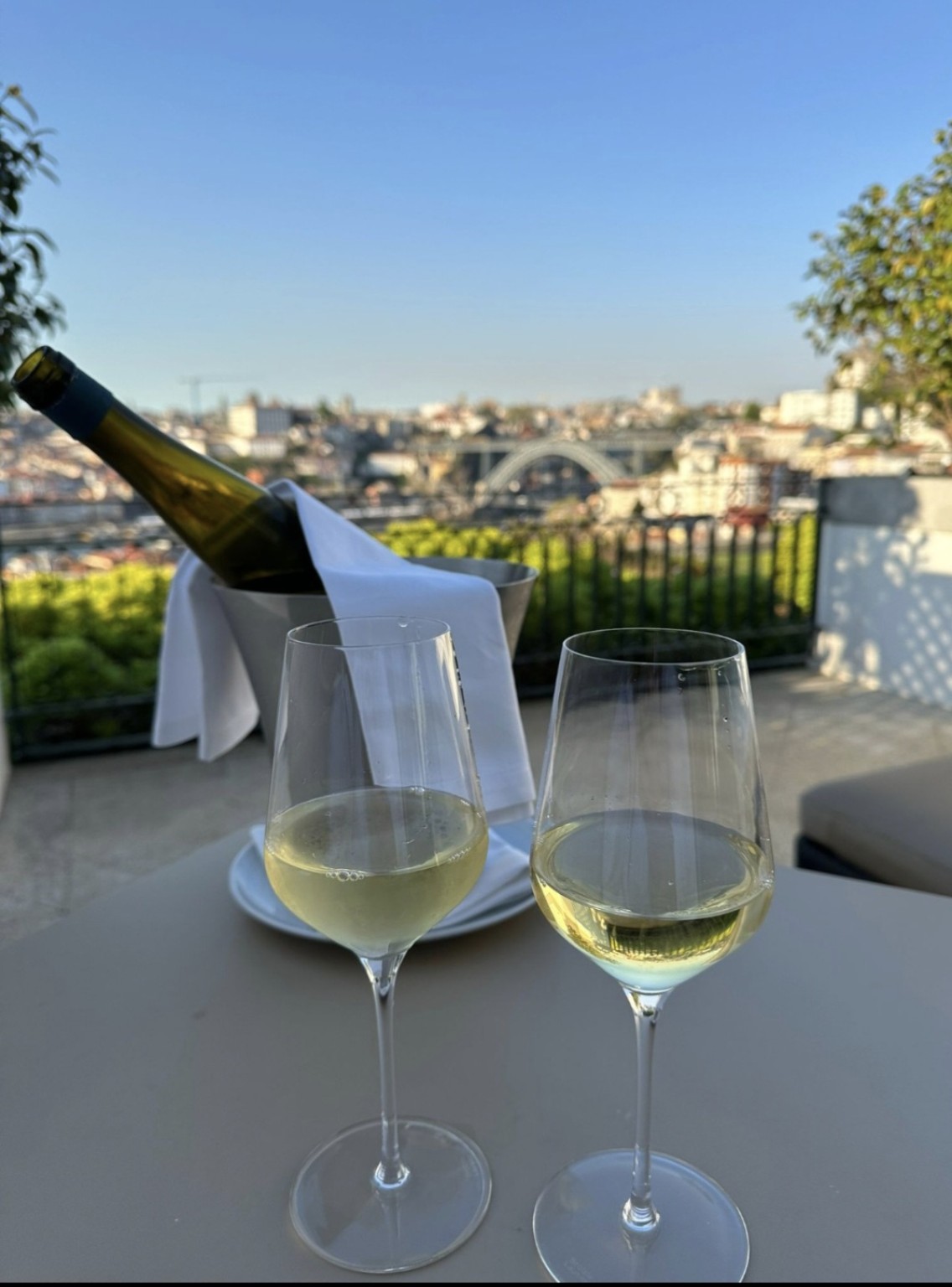
The Yeatman made sense because I wanted to use it. I had a hosted tour of the property, used the spa, ate at the Orangerie and spent time on my terrace overlooking Porto. I was upgraded on arrival, so my own room experience should be understood in that context.
The hotel's connection with Portuguese wine runs through the property rather than feeling like decoration. The wine list also had a much broader range of price points than I expected when I stayed, and dinner at the Orangerie included some of the best octopus I have eaten.
The outdoor infinity pool was closed in March because it was still too cool. The spa, however, gave me exactly the slower post-cruise day I wanted. Later, sitting on the terrace with a half-bottle of port and the city across the river was one of my favourite moments of the trip.

WORTH KNOWING
A higher room rate makes most sense when the hotel changes the holiday. If you plan to leave first thing and return only to sleep, I would question paying for a destination hotel. If you want the spa, terrace, restaurants, wine and time to enjoy the view, the calculation changes completely.
If The Yeatman sounds like somewhere you'd enjoy, ask me about it. I now have a contact at the hotel and can check the options available for your dates, including whether there are any additional benefits available for your stay.
Porto or Gaia?
I do not think one is simply better. They solve different problems.
Choose central Porto when the city is the priority
For a first stay, a pre-cruise night or two, or a trip built around restaurants and exploring on foot, central Porto makes sense. You are paying for access to the city rather than facilities you may barely use.
Choose Gaia when the stay itself is part of the experience
A hotel such as The Yeatman works differently. You are slightly removed from the bustle and looking back towards Porto. That can be a benefit if the point is to slow down, use the hotel and enjoy the view rather than maximise sightseeing hours.
I would not split a short two-night extension between Porto and Gaia just to experience both. Another check-out, transfer and check-in has to earn its place in an itinerary.
What I would not automatically add around a full Douro cruise
I would not automatically book another Douro Valley day trip immediately before or after a full river cruise. If the cruise already gives you meaningful time in the valley and at wine estates, I would rather use the extra time for Porto or for a genuinely different experience.
I also would not fill every spare hour. Porto was at its best for me when there was enough structure for the trip to work and enough space to change our minds.
How I would plan it next time
• For a full Douro river cruise: add around two nights in central Porto before embarkation.
• If Porto itself is the trip: allow around three nights and resist turning every hour into an attraction.
• Upgrade the river-cruise cabin only when the extra space, balcony or position matters to how you will use it.
• Treat daylight sailing as part of the itinerary, particularly on a scenic river such as the Douro.
• Add a higher-end Gaia hotel only when you have time to use what you are paying for.
• Avoid unnecessary hotel changes. A different postcode is not automatically a better itinerary.
The most expensive version of Porto and the Douro is not automatically the best one. I would spend more where it changes the experience and keep the simpler option where it does not.
Planning Porto with a Douro cruise?
I can help compare the river cruises themselves as well as the pieces around them: how much time to allow in Porto, whether a central stay or Gaia makes more sense, where a cabin upgrade is worthwhile and how to avoid paying twice for experiences your cruise already includes. If you are not yet sure what style of river cruise suits you, start with What type of river cruiser are you?
TALK TO LAURA

Comments